

Equality Now calls for urgent action as backlash against women’s rights intensifies
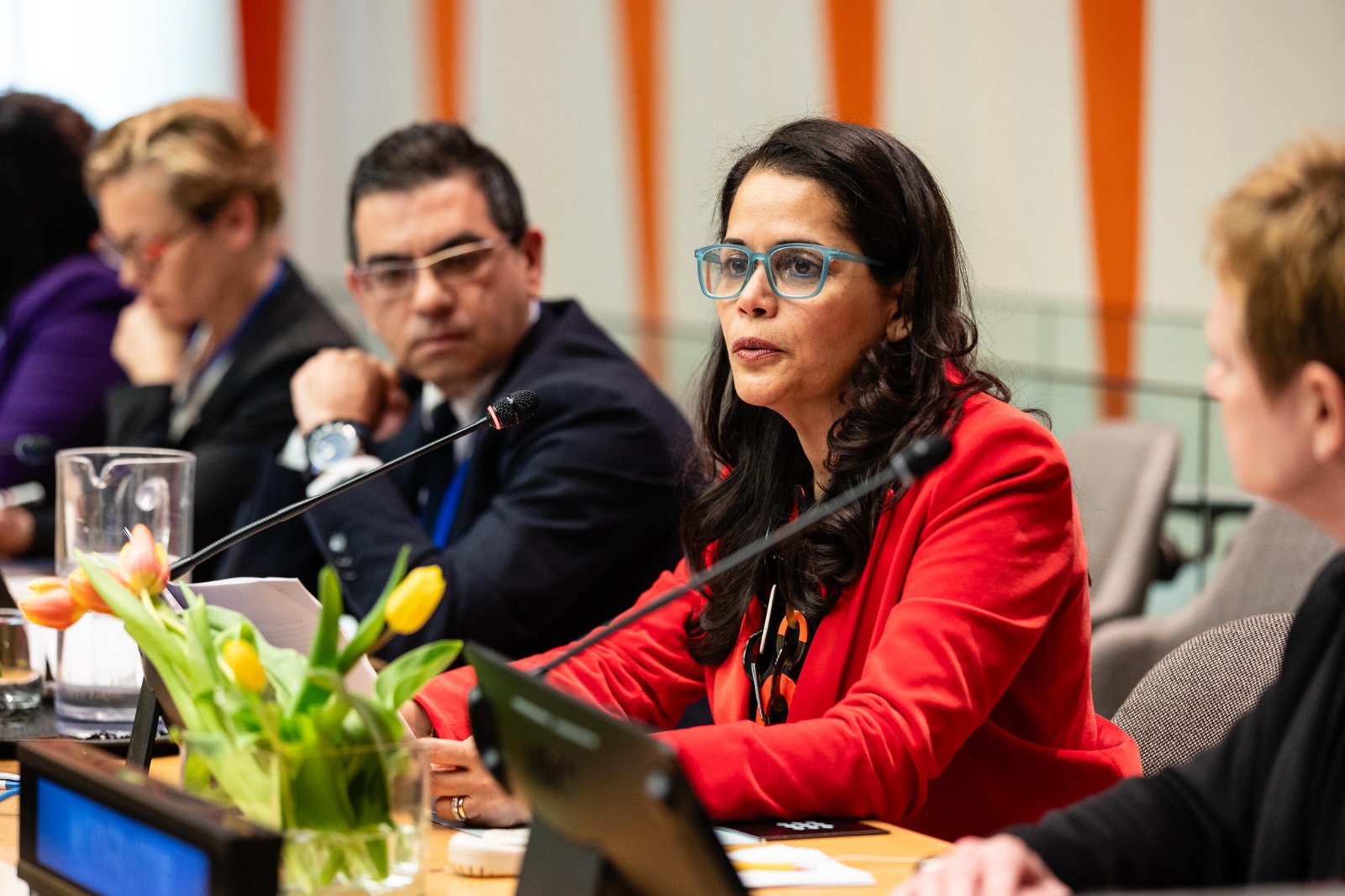
S.Mona Sinha, Equality Now Global Executive Director, at the Inter-Parliamentary Union. Photographer - Joel Sheakoski
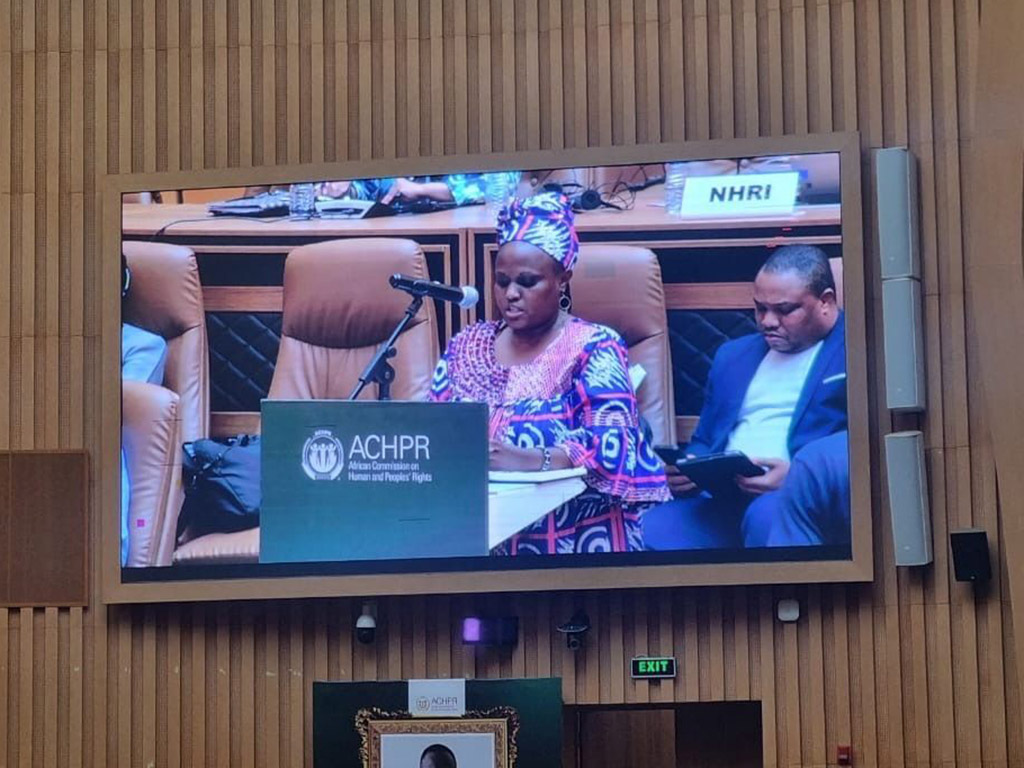
Deborah Nyokabi, Equality Now legal expert, at the African Commission on Human and Peoples’ Rights (ACHPR) 85th Ordinary Session
Equality Now’s ‘Global Backlash against Women’s and Girls’ Rights - Words and Deeds Update’ examines global trends that pose growing threats to gender equality.
Governments are manipulating multilateral mechanisms to undermine gender equality, and withdrawing from or weakening international treaties and UN bodies, while those defending human rights are experiencing mounting repression and risks.
Equality Now’s policy brief, ‘Global Backlash against Women’s and Girls’ Rights - Words and Deeds Update,’ examines key global trends that pose growing threats to gender equality, drawing on examples of legal and policy developments that are undermining gender equality.
The brief aims to support efforts to resist regressive change and to inform the development of coordinated global and regional strategies to confront the backlash, particularly within international and multilateral forums. It sets out clear calls to action for governments, offering concrete recommendations to counter the backlash, defend human rights standards, support civil society, and uphold gender equality at national, regional, and international levels.
This Words and Deeds Update builds upon Equality Now’s 2025 report, 'Words & Deeds: Holding Governments Accountable in the Beijing+30 Review Process,' which documented existing and emerging legal threats that are reversing previous gains or stalling progress on women’s and girls’ rights.
ANTI-GENDER RIGHTS MOVEMENTS THREATEN DECADES OF LEGAL PROGRESS
The rise of anti-gender rights movements is jeopardising legal protections for women and girls around the world, threatening to undo decades of legal progress. This growing opposition to feminist values and principles is not a fringe movement, nor is it happening in isolation. Far-right and anti-gender equality movements are strategic and organised, with well-funded international networks increasingly coordinating with, influencing, and empowering local groups working to oppose gender equality.
Religious, cultural, and nationalist justifications rooted in harmful gender stereotypes and misleading narratives, including the weaponisation of so-called “family values,” are increasingly being applied to justify regressive laws and undermine and revoke women’s rights, including restricting sexual and reproductive rights.
Anti-gender rights actors are being emboldened, as can be seen with legal and policy initiatives that are promoting and seeking to legitimise harmful practices such as child marriage and female genital mutilation (FGM).
THREATS TO MULTILATERALISM AND INTERNATIONAL HUMAN RIGHTS STANDARDS
International law and multilateralism are under increasing strain, as States withdraw from international treaties, defund United Nations mechanisms, and weaken global systems of human rights accountability.
Anti-rights and anti-gender equality movements are actively working to remove or water down references to “gender” within UN texts, negotiations, and frameworks. The loss of gender-inclusive language threatens to weaken international human rights standards, erode accountability for gender-based violence and discrimination, and marginalise the diverse lived realities of women and girls.
CALLS FOR CROSS-REGIONAL COLLABORATION AND KNOWLEDGE SHARING
In response to the findings, Equality Now convened a webinar titled ‘Holding the line: Confronting the global backlash against women’s rights’ where Equality Now legal experts shared sobering regional insights into how anti-women’s rights backlash is eroding gender protections across Africa, Eastern Europe, and Latin America.
While acknowledging challenges, the speakers also shared pathways for positive action and progress. The discussion highlighted successful feminist legal advocacy, grassroots mobilisation and movement-building, as well as the strategic use of international legal mechanisms to resist and reverse harmful policies. A central theme was the critical importance of international human rights law and the urgent need to defend multilateral systems that uphold gender equality.
WOMEN’S RIGHTS UNDER ATTACK AROUND THE WORLD
At the national level, State institutions mandated to advance gender equality are being dismantled or diluted. At the same time, governments are introducing legislation that is shrinking civil society spaces. Restrictions are being placed on access to funding and resources for NGOs, and measures are being enacted to curtail freedom of speech and expression.
Harmful narratives targeting gender justice movements are being amplified in the media, legitimising regressive policies and undermining progress toward equality.
Widespread attacks on women’s rights continue in Afghanistan, the United States, and Iran. New legislative proposals in Bolivia and Uruguay threaten to weaken protections against sexual violence. Civil society organisations face increasing pressure under repressive laws, such as in India and Kyrgyzstan, while government bodies responsible for advancing women’s rights are being dismantled in South Korea and Argentina.
There has been a marked rise in anti-LGBTQ+ legislation, including the revival of colonial-era criminal laws and the introduction of new measures that criminalise sexual orientation, gender identity, and gender-affirming care, with anti-LGBTQ+ legislation enacted in countries such as Georgia and the United States.
GOVERNMENTS URGED TO PROTECT WOMEN’S RIGHTS AGAINST PUSHBACK
The rights-based forces at the international, regional, and national levels, as well as the rights holders, all have an important role to play to strengthen the ground against the pushback. Governments must:
* Strengthen national laws and end any sex and gender-based discrimination in the law to lay the foundation against the backlash against the rights of women and girls.
* Intervene in multi-lateral platforms and institutions to promote and defend a rights-based approach to negotiations, statements, agreements, and consensus-building.
* Encourage and incentivise other governments to incorporate international human rights standards in their laws and policies.
* Push back and guard against the weaponisation of language around ‘family values’ that is meant to weaken the hard-won rights of women and girls, and LGBTQ+ persons.
* Provide material resources and financial and political support to civil society organisations, feminist, human rights-based, and multistakeholder movements.
* Protect freedom of expression and eliminate arbitrary restrictions or criminalization of human rights defenders, independent media, survivors, and activists.
* Meaningfully engage with vulnerable and excluded populations, human rights defenders, and civil society to understand and act on concrete concerns raised.
* Expand and support the mandate of government women- and gender-focused ministries.
- END -
ABOUT: Equality Now is a worldwide human rights organisation dedicated to securing the legal and systemic change needed to end discrimination against all women and girls. Since its inception in 1992, it has played a role in reforming 120 discriminatory laws globally, positively impacting the lives of hundreds of millions of women and girls, their communities, and nations, both now and for generations to come.
Working with partners at national, regional, and global levels, Equality Now draws on deep legal expertise and a diverse range of social, political, and cultural perspectives to continue leading the way in steering, shaping, and driving the change needed to achieve enduring gender equality, benefiting all. For more details, go to www.equalitynow.org
Tara Carey
Equality Now
+44 7971 556340
email us here
Visit us on social media:
LinkedIn
Bluesky
Instagram
Facebook
YouTube
Legal Disclaimer:
EIN Presswire provides this news content "as is" without warranty of any kind. We do not accept any responsibility or liability for the accuracy, content, images, videos, licenses, completeness, legality, or reliability of the information contained in this article. If you have any complaints or copyright issues related to this article, kindly contact the author above.
