

New Synthetic Lethal Strategy Identifies Potential Treatment for APC-Deficient Colorectal Cancer

Validation of ALDH2 as a synthetic lethal partner of APC using xenograft tumor models
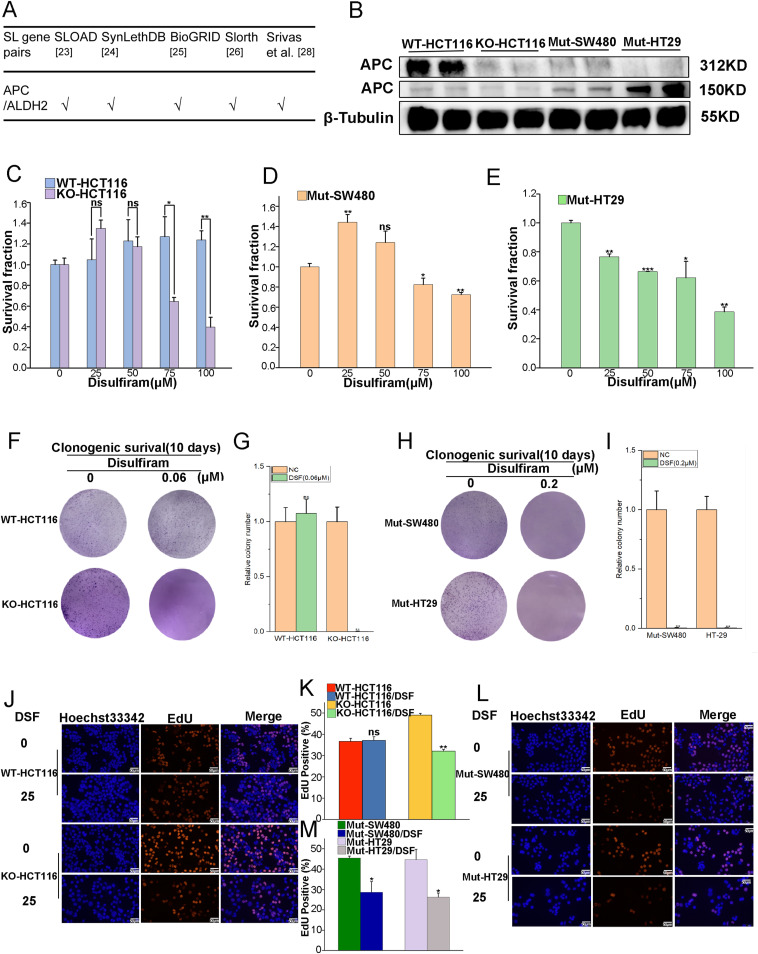
Synthetic lethality in APC-deficient CRC cell lines treated with ALDH2 inhibitors.

Activation of the ROS/ASK1/JNK pathway induces apoptosis in APC-deficient CRC cell lines treated with an ALDH2 inhibitor
SHANNON, CLARE, IRELAND, April 6, 2026 /EINPresswire.com/ -- Researchers have identified a novel therapeutic approach for colorectal cancer by exploiting a specific genetic vulnerability found in a majority of patients. The study focuses on the adenomatous polyposis coli (APC) gene, a critical tumor suppressor that is mutated in approximately 60% to 85% of colorectal cancer cases. Because direct pharmacological restoration of APC function is challenging, the research team employed a synthetic lethal strategy to identify partners that, when inhibited, specifically kill cells lacking the APC gene. Through bioinformatics screening and experimental validation, the enzyme aldehyde dehydrogenase 2 (ALDH2) was identified as a primary candidate for this targeted intervention.
The findings reveal that the ALDH2 inhibitor disulfiram, a drug traditionally used to treat alcoholism, significantly reduces the proliferation of APC-deficient cancer cells while sparing healthy cells with wild-type APC. Mechanistically, the loss of APC already predisposes cells to increased levels of reactive oxygen species (ROS). The introduction of an ALDH2 inhibitor further drives the continuous accumulation of these volatile molecules within the tumor cells. This oxidative stress triggers the ASK1/JNK pathway, a signaling cascade that ultimately initiates programmed cell death, or apoptosis.
Laboratory tests using various human colorectal cancer cell lines demonstrated that disulfiram treatment leads to G0/G1 phase arrest, effectively stopping the cancer cells from dividing. The efficacy of this treatment was further confirmed in xenograft tumor models, where the administration of disulfiram significantly slowed tumor growth and reduced overall tumor mass in mice. Interestingly, the study found that adding a low concentration of copper ions further enhanced the anti-tumor activity of the inhibitor.
This research highlights a promising shift toward personalized medicine for gastrointestinal malignancies. By using APC deficiency as a biomarker, clinicians may eventually be able to identify which patients are most likely to respond to ALDH2 inhibition. Because disulfiram is already an approved medication, these findings suggest a cost-effective and time-efficient opportunity for drug repurposing in the fight against one of the world's deadliest cancers. While the results are encouraging, the study notes that further clinical trials are necessary to confirm the safety and effectiveness of this strategy in human patients.
# # # # #
Genes & Diseases publishes rigorously peer-reviewed and high quality original articles and authoritative reviews that focus on the molecular bases of human diseases. Emphasis is placed on hypothesis-driven, mechanistic studies relevant to pathogenesis and/or experimental therapeutics of human diseases. The journal has worldwide authorship, and a broad scope in basic and translational biomedical research of molecular biology, molecular genetics, and cell biology, including but not limited to cell proliferation and apoptosis, signal transduction, stem cell biology, developmental biology, gene regulation and epigenetics, cancer biology, immunity and infection, neuroscience, disease-specific animal models, gene and cell-based therapies, and regenerative medicine.
Scopus CiteScore: 7.3
Impact Factor: 6.9
# # # # # #
More information: https://www.keaipublishing.com/en/journals/genes-and-diseases/
Editorial Board: https://www.keaipublishing.com/en/journals/genes-and-diseases/editorial-board/
All issues and articles in press are available online in ScienceDirect (https://www.sciencedirect.com/journal/genes-and-diseases ).
Submissions to Genes & Disease may be made using Editorial Manager (https://www.editorialmanager.com/gendis/default.aspx ).
Print ISSN: 2352-4820
eISSN: 2352-3042
CN: 50-1221/R
Contact Us: editor@genesndiseases.com
X (formerly Twitter): @GenesNDiseases (https://x.com/GenesNDiseases )
# # # # # #
Article Reference
Tingming Liang, Lulu Luo, Yajing Du, Xinbing Yang, Xinru Xu, Haochuan Guo, Zhiheng He, Guang Yang, Li Guo, ALDH2 inhibition induces synthetic lethality in APC-deficient colorectal cancer via ROS/ASK1/JNK pathway, Genes & Diseases, 2026, 102057, ISSN 2352-3042, https://doi.org/10.1016/j.gendis.2026.102057
Genes & Diseases Editorial Office
Genes & Diseases
+86 23 6571 4691
email us here
Legal Disclaimer:
EIN Presswire provides this news content "as is" without warranty of any kind. We do not accept any responsibility or liability for the accuracy, content, images, videos, licenses, completeness, legality, or reliability of the information contained in this article. If you have any complaints or copyright issues related to this article, kindly contact the author above.
